Life
Blessed Maria Teresa of St. Joseph intended to render a service to the Church through the foundation of the Carmel of the Divine Heart of Jesus and a gift to the world by uniting the contemplative and apostolic life. (Constitutions, Article 10)
She imbued her Sisters with the totality of our Lord’s love and of His gift of self to the Father for our redemption. Our prayer, our consecrated life, our community life and our apostolate must be characterized by this totality which is rooted in the love of Christ, in the devotion to the Divine Heart of Jesus and to the Blessed Virgin Mary and in the spirit of the Carmel of St. Teresa of Jesus.
“The name “Carmelite Sisters of the Divine Heart of Jesus”, however, implies even more. In the Heart of Christ, the center of the love of the God–Man Jesus Christ, love and atonement are symbolized and exactly expressed as the fruit of our following of Christ. The love of Christ must be made visible among us by our love. Mother Maria Teresa wanted the devotion to the Sacred Heart in our Carmel to be animated with the intention of offering reparation to the Divine Heart of Jesus for all unbelief, and especially, for the denial of His Divinity.” (Constitutions, pg 20-21)

We draw strength for our apostolic activities through prayers, acts of reparation and self-denial. The exercises of our congregation, including community prayer, are so arranged that the sisters engaged in these apostolic works can easily find time to participate in them. Only in this way can we succeed in doing what the Church requires of us, namely, that these apostolic labors will be penetrated by an inner spirit and that they stem from an intimate union with Christ.
“The religious life is a spiritual commitment and, as such, we can only understand it in faith and love.” (Constitutions, pg 34)
Spirit
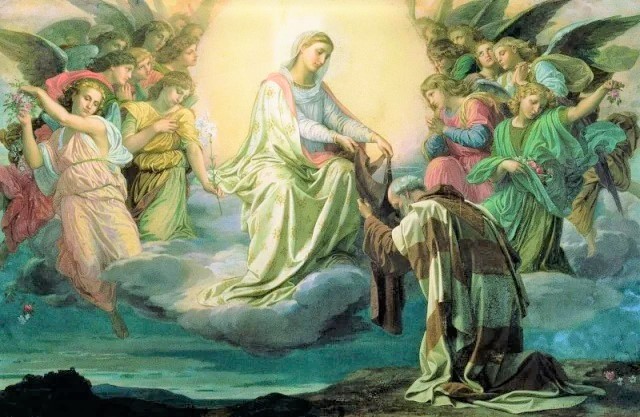
As Carmelites, we venerate Mary as our Queen and Mother. For us, she is the prototype of faith and the ideal of the most intimate union with Christ.
Our Teresian charism consists of a way of life in which prayer and apostolic service in the Church blend harmoniously. Following the example of St. Teresa of Avila and St. Therese of Lisieux, “we regard prayer – particularly prayer for priests – as a sacred duty required by our special mission among the People of God”
The spirit of our Mother must animate the entire life of her spiritual daughters; then the following of Christ, in a basic Marian attitude, will unite us in a vital family spirit.” (Constitutions pg 21)
Vows
Through Baptism, all Christians are called to the fullness of Christian life. By means of the three Evangelical Counsels of Poverty, Chastity and Obedience, made in accordance with our Constitutions, our baptismal consecration is further unfolded. The vows are based upon the words and example of our Lord, and do not stunt the human personality. When freely accepted, the evangelical counsels contribute to the purification of the heart and to the freedom of the spirit.
Prayer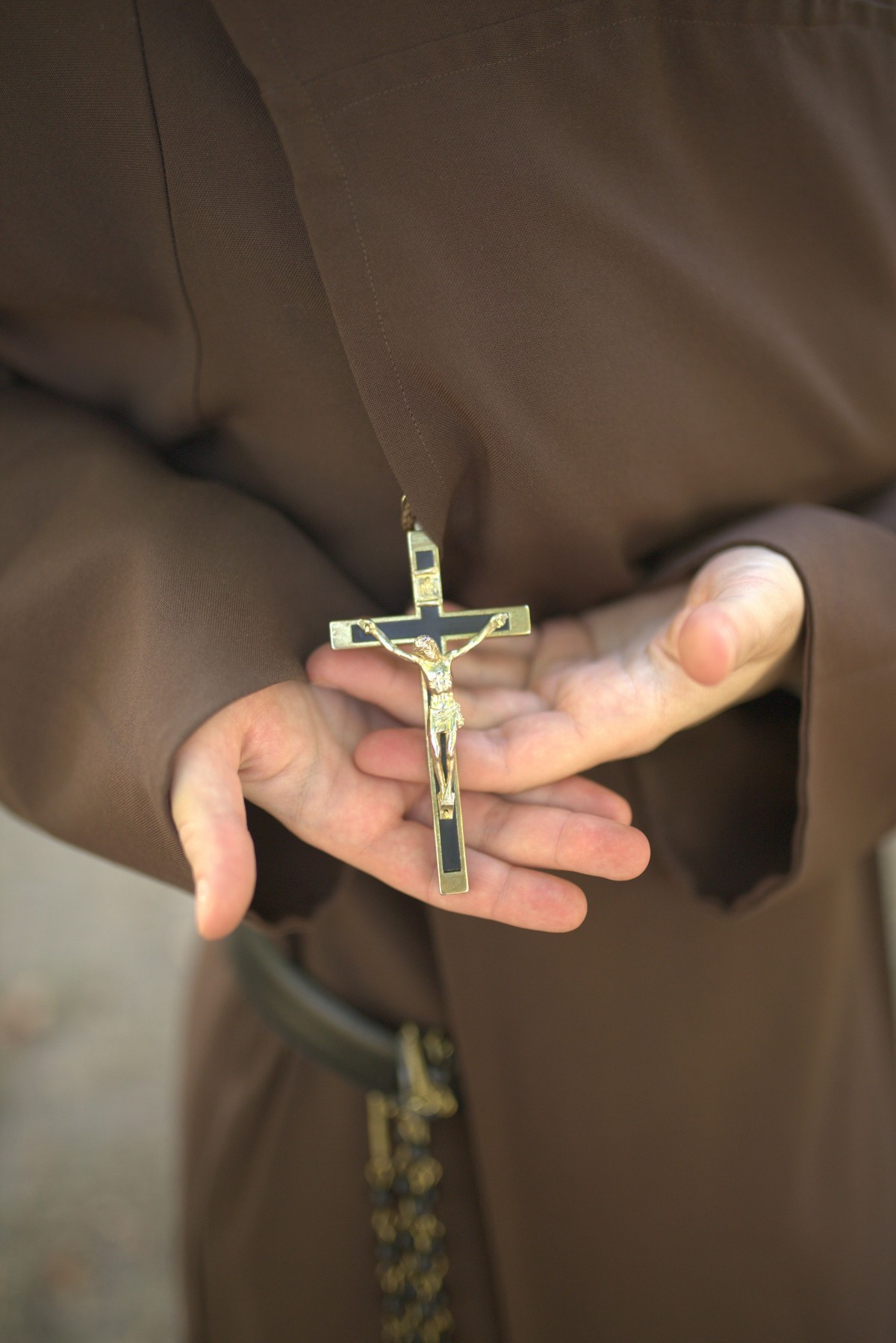
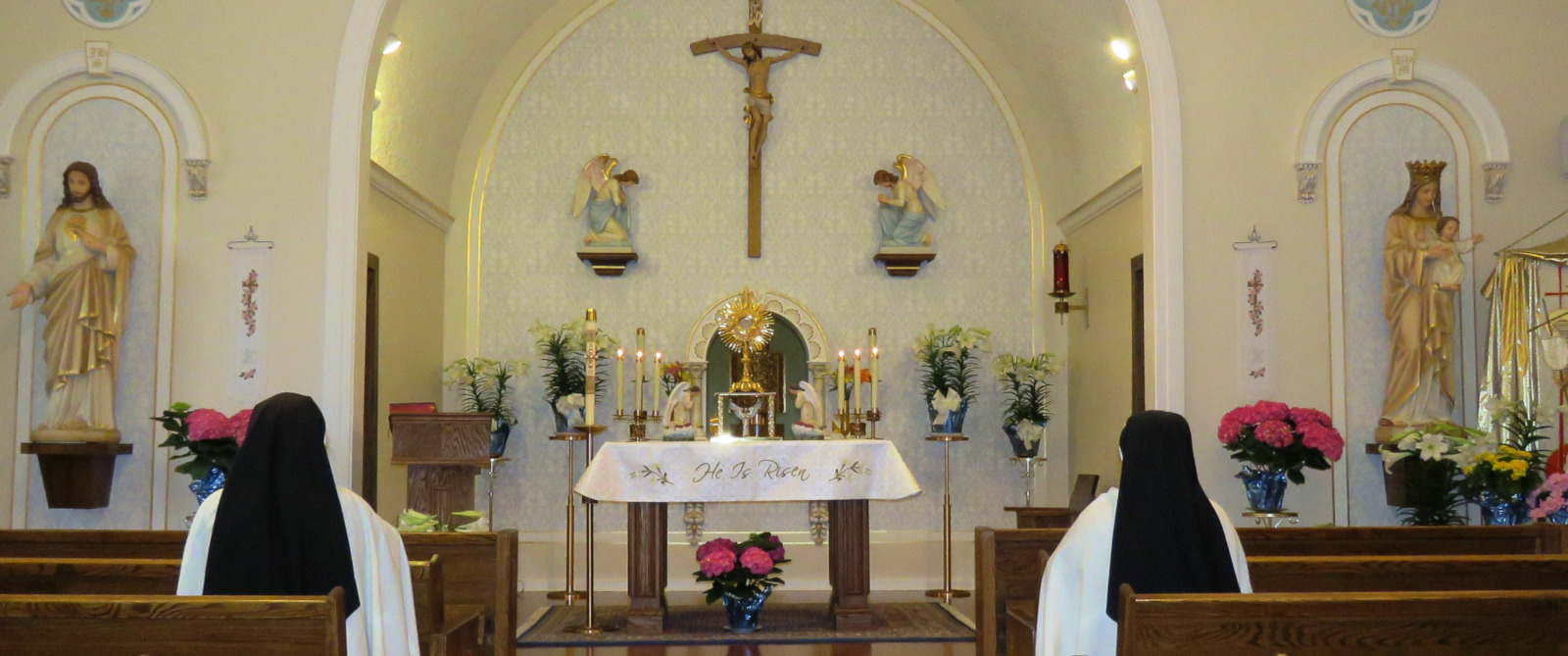
The sources of our life of prayer are primarily three: Sacred Scripture, which is a sure means of deepening our knowledge of Truth; the celebration of the Eucharist, which constitutes the center of our communal life; and the Office or Liturgy of the Hours, which is a call to praise and reflection at different times of the day, reminding us constantly of God’s living presence in his Church.
In our personal prayer, by which our day is likewise sanctified, meditation takes priority. The fundamental aim of mental prayer, as proposed by St. Teresa, is the attainment of a friendly, intimate conversation with Christ.
Community
Living our life in community is one of our essential means of attaining holiness. Within the Church we are a group walking together on the road to God. As members of Carmel D.C.J., we have the same goal and perform the same service. United by a common bond of love, we pray, work, dine, recreate and plan together – as a family – guided by our respective Superiors.
In every convent, special consideration should be given in arranging the order of the day so that all the Sisters may come together for prayer, meals, and other sisterly encounters, thus experiencing the joy of community life.
Through our Religious Profession, we place our life at the service of God and the Church. We are taken by God as His possession, sent, and given to the world. From our Vows, there also follows an obligation to adoration, community, reparation and apostolic service. (Constitutions, Article 65)
The Habit
Ours is the precious privilege of honoring Our Lady of Mount Carmel with our religious habit. Our clothes are an exterior manifestation in light of an internal ‘setting aside’ or dedication to the service of God and His Church that publicly distinguishes us as Religious Sisters.
Carmel is intrinsically the Blessed Virgin Mary’s Order. The color of our habit calls to mind earth or ground, a symbol of meekness in which the garden of Carmel nourishes fruition. Eph 4:24, “Put on the new man, which has been created in the image of God in true justice and holiness." We are to leave our worldly self behind when we enter the convent. God's image reflects the virtues, His attributes, Himself. The outermost piece is the Scapular. This magnified version of the smaller scapulars that the laity enroll themselves in, highlights Mt 4:24, “Jesus says: Take my yoke upon you, and learn from me, for I am meek and humble of heart; and you will find rest for your souls. For my yoke is easy, and my burden light.” A yoke, as we know, rests on both shoulders, this balances our humanness with the divine life we are called to share in Christ.
The black leather Belt calls to mind Ps 18:33, “He will gird you with strength.” Belts in the Old Testament were worn in battle to carry soldiers’ weapons. Our Profession Rosary is a “spiritual weapon” that we wear to guard us against evil. This Marian devotion leads it’s users more deeply into the mysteries of Christ’s life. The oval medal attached is specific to our Carmel DCJ bearing images of the Divine Heart of Jesus and His Mother outlined in Carmelite mottos.
The Veil represents our total consecration to the Father Who knows us body and soul.
The Crucifix worn under the scapular, signifies Mk 8:34-35, “Whoever wishes to come after me must deny himself, take up his cross, and follow me.”
The White Carmel Mantle witnesses our membership under the Prophet Elijah’s spirit and our patroness’ depiction.
Horarium for Provincial Motherhouse
Weekday Schedule (Wauwatosa, WI)
|
Stations are daily prayed privately Confession provided by an appointed priest are generally heard for our community once a month. Holy Hour: each Thursday evening. On First Fridays, Adoration of the Blessed Sacrament is held rather than on the following Sunday Special Feasts and on every Sunday: Lauds and Vespers are sung on. Careful attention is paid to special directives during the year so that our sisters are in full compliance with our Liturgy of the Hours and our Carmelite ORDO for the respective year.
Sundays: On our day of rest we have similar prayer times with no community reading. Adoration follows Mass until Benediction with Matins then mid-day meal with less apostolic work. |
|

